 The House Truth
Tickets Don't Walk Houses
Ben Vinson ·
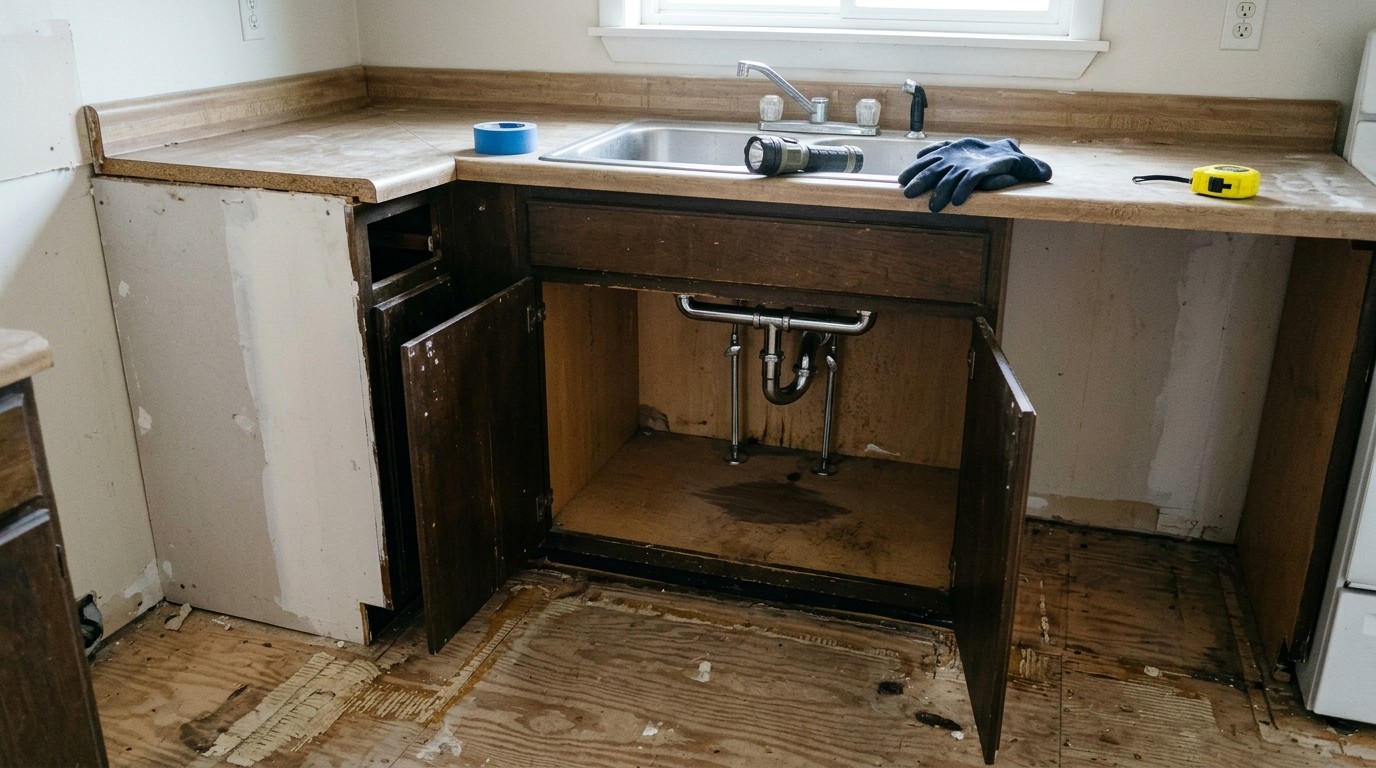
I have walked a lot of houses where every ticket said closed and the house still wasn't ready for a tenant. The leak came back. The same vendor came back for the same item. The home sat empty while the rent clock ran. The work was logged. Nobody was trained to check it.
Work order software routes the request. It does not walk the house. On a new single-family package, the gap between a closed ticket and a lease-ready home closes one way: a written scope, a scored contractor, and a field manager trained to verify the work.
What the software does well
I'll give the software its credit. It takes the request in, makes it a record, and sends it to someone who can fix it. A photo at intake means the dispatcher sees the stain before anyone drives out. An approval threshold keeps a small repair from waiting on a signature. Requests stop living in texts and voicemails, and every job has a clock on it.
Here's the limit. A ticket shows a job was requested, assigned and closed. "Closed" is a status. Whether the shutoff valve holds or the grade still pitches toward the slab is a fact about the house. The software can't see it.
The scope is the handoff
The written scope is the handoff between the person who saw the problem and the person who fixes it. A scope that says "repair leak" lets a vendor close the ticket when the drip stops. A scope that names the fixture, the fix and the photo that proves it gives the field manager something to check against.
Verification is a person
On a package under 350 homes, verification falls to the field manager. The contractor scorecard records what that person finds on each job.
When I coached youth football, the play on the whiteboard never mattered until somebody watched the film. Same here. Measure the result in the house, not in the queue. If tickets close faster and the house numbers don't move, the software is working and the repairs are not.
Walk it the way water moves
On scattered sites, the one thing that can be the same in every market is the walk path. Start outside: roof, gutters, grade at the slab. Then under every sink, the water heater, the panel, the crawlspace or attic. Check each against that home's scope line and take the photos the scope called for. Water tells you what the ticket won't.
Every visit on a scattered site is a drive. Verify on the visit that closes the job, because a second trip after a callback gets paid for twice. Batch walks by metro so the scorecard collects findings you can compare across markets.
Three things carry from package to package
A package has a start and an end. What carries to the next one has to be paper and people.
The scope. Built by system, in walk-path order. Every line names the fixture, the fix and the proof photo. Any line that caused a change order last time gets rewritten before the next package starts.
The photo standard. Same angles, same order, every house. A crawlspace in one metro should read like a crawlspace in another.
The scorecard. Score every vendor on every job: scope variance, change orders per job, punch age and callbacks. Package two opens with package one's scores. Vendors who held the bar get the first houses.
The field manager ties it together, and that person needs training before the first walk. Otherwise the standard lives in whoever built it and leaves when they do.
Four numbers to pull this week
Use your last package or last quarter of renovations.
- Days to lease-ready. From possession to the day a person signed off on the walk. Not the ticket close date. No sign-off date? That's your first finding.
- Callback rate. Jobs marked complete that needed a second trip for the same item. Sort by vendor and by metro.
- First-30-day maintenance calls. Calls per home in the first month after move-in. A drain, toilet or water heater call is a miss the walk should have caught.
- Scope variance. Final invoice against written scope, line by line. No written scope means you're comparing against memory.
Put all four in one table by house. Leave industry averages out. A baseline built from your own records is the only one your field manager will trust.
Put a name beside the walk
Before your next package opens, put one name beside sign-off on every home, with the date of the walk. Train that person before the first house, not after the first callback.
Then watch package two. If it opens faster and cleaner because the paper and the people carried over, the capability is yours. If it opens like the first one, the standard lived in one person's head.
The house tells the truth before the lease date does.
Want a second set of eyes on one house? I do a One-House Review: a remote desk review of your own inspection files, meaning your scope, photos and bids. No onsite visit. I'll tell you where the scope is loose, what the photos don't prove, and where the bids will grow. Book a One-House Review