 The House Truth
White paper series · One week at a time
Closing the Operational Gap: the weekly series
The first renovation is where the biggest dollars go into a rental, so that is where one lease-ready standard pays off first. This series breaks the white paper into short weekly reads, each with one field task you can try on your own job. A new week is added each time it posts.
Week 1 · Tue Oct 20, 2026
The problem
Why the first renovation is where most rental dollars leak, and why a home called ready often is not lease ready.
Leasing gets trained. The people who build the unit get 3 days.
Look at what's publicly available for rental operations. Leasing, fair housing, compliance, maintenance techs, investors: all have real training programs.
Now look at the people who renovate the homes. The superintendents and field leads who decide whether a unit is actually lease-ready.
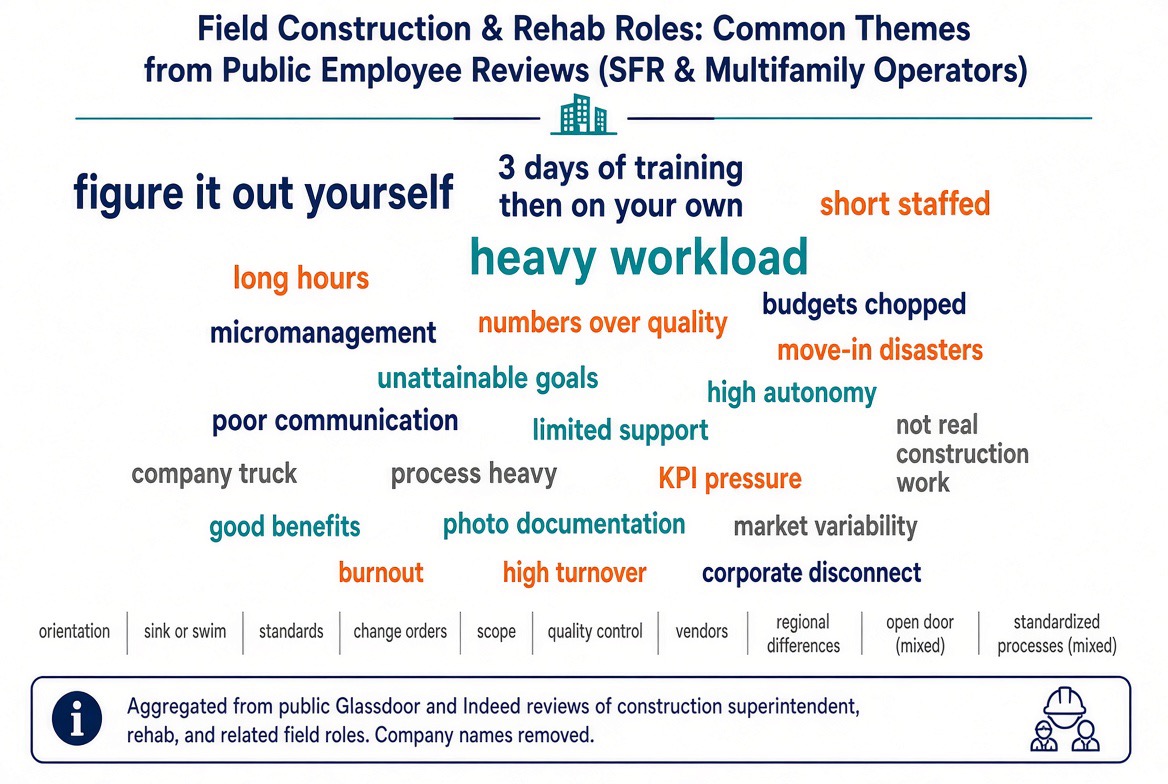
We read a sample of public Glassdoor and Indeed reviews from those roles. The same phrases kept showing up:
• figure it out yourself
• 3 days of training, then on your own
• numbers over quality
• budgets chopped
• move-in disasters
That's a qualitative read, not a survey. But the pattern is hard to miss: autonomy without training.
It shows up in days to lease-ready, in callbacks, and in residents who start their lease in a house that isn't right.
Over the next six weeks we're breaking down our white paper on closing that gap. One post a week.
If you work in the field: what did your first week look like?
Week 2 · Tue Oct 27, 2026
The money
What each extra day before a home is lease ready costs, so you can put a dollar figure on cycle time.
Every day a home sits short of lease-ready costs about 3.29% of a month's rent.
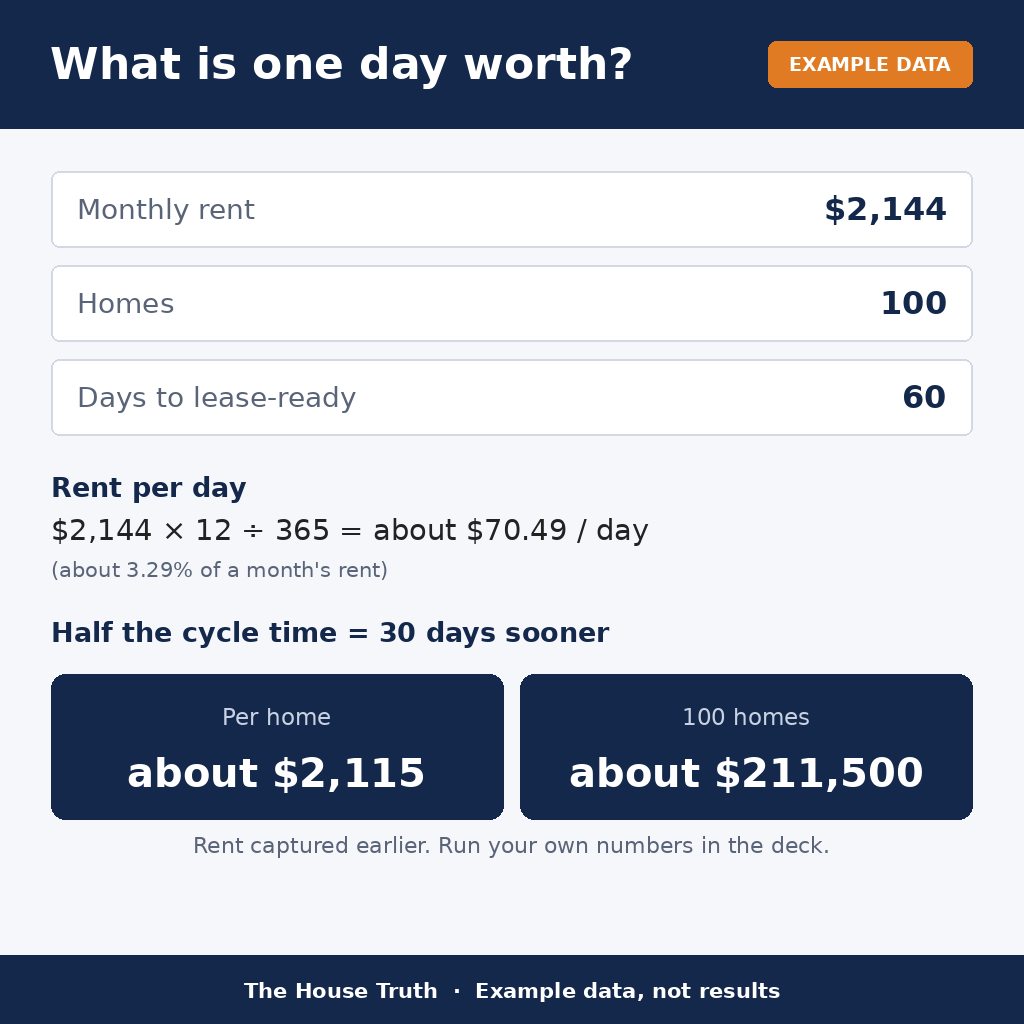
The math is simple. Monthly rent × 12 ÷ 365 is what one day is worth.
Example numbers (run your own): $2,144 rent (about what the big single-family rental companies ask), 100 homes, 60 days to lease-ready.
Cut that cycle time almost in half and each home hits lease-ready 30 days sooner. That's about $2,115 per home and about $211,500 across the portfolio, captured earlier.
Lease-up may not happen on day one. But the leasing clock always starts on the lease-ready date. Every day you save moves that date up.
The program has shown about 49% faster cycle time to lease-ready. And there's no rehab cost in this math. It's purely the calendar.
We built a free calculator for it. Put in your rent, your units, and your current days to lease-ready. It takes 30 seconds.
What's one day worth at your rent?
Week 3 · Wed Nov 4, 2026
The fastest win
The one field habit that protects renovation dollars fastest: checking the work against one written standard before keys go out.
The fastest win in a renovation isn't the scope. It's the last walk before keys.
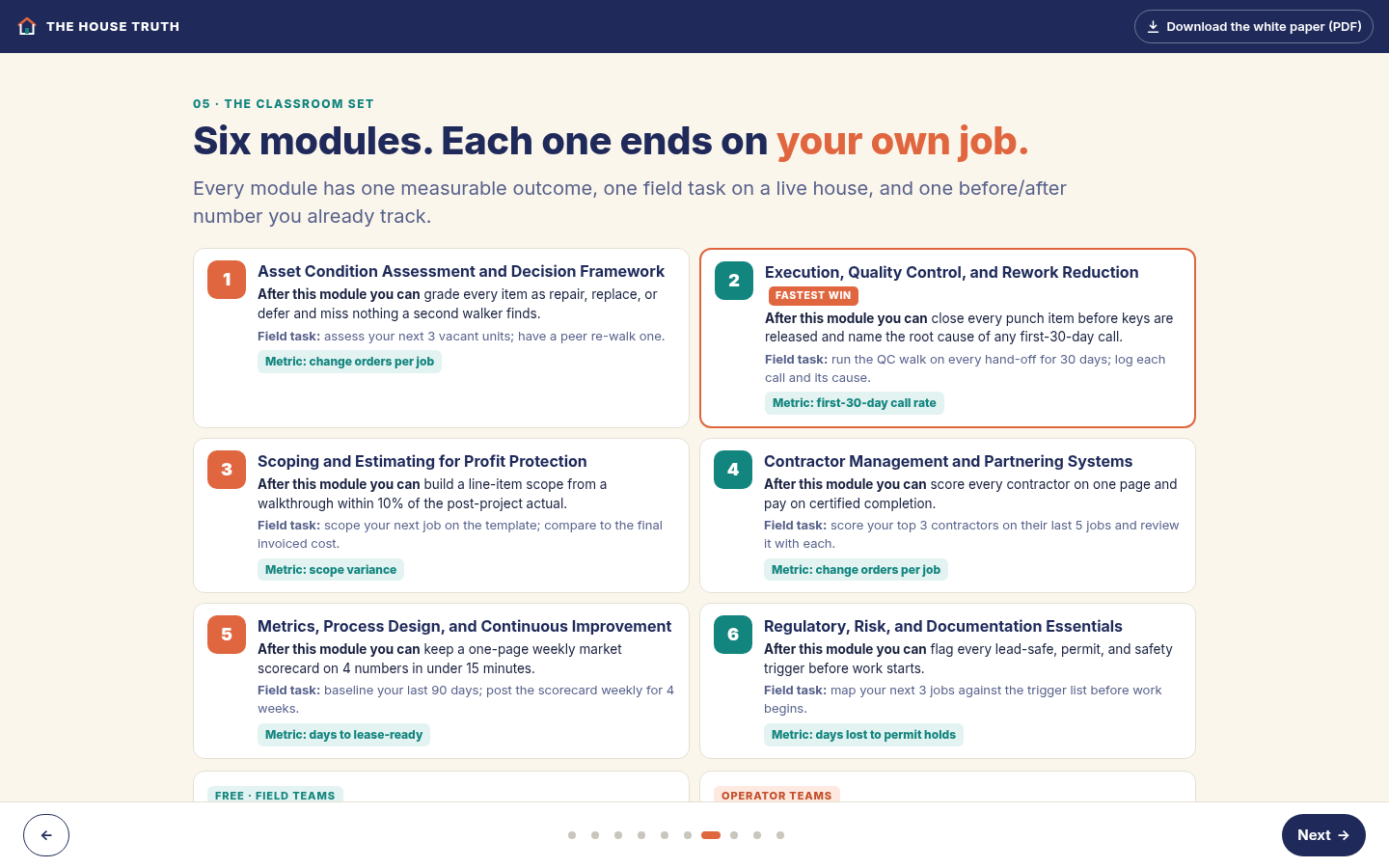
Think about the last few first-30-day maintenance calls in your market. How many could the final walk have caught?
Here's a 5-minute version of the lesson:
1. Walk every unit before keys are released. Every one, not just the ones that feel risky.
2. Run every faucet and drain. Test every outlet and GFCI. Open and close every door and window.
3. Close every punch item before the home is called lease-ready. Not scheduled. Closed.
4. If a call still comes in during the first 30 days, write down the root cause.
Field task this week: do it on every unit you hand off, and log each call that still comes in.
The program has shown about 82% fewer move-in calls. A real QC walk is where that starts.
This is what our free weekly training looks like: one 5 to 10 minute lesson and one field task you try on your own job that week.
If you're boots on the ground, get one weekly.
Read the full white paper Download the PDF
Images labeled "Example data" use example numbers, not client results.